
Infrastructure Wiring & Backbone Routing in Denver, CO
Modern commercial buildings rely on strong, well-planned infrastructure wiring to support data flow, communication systems, security networks, and future technology upgrades. At Denver Wiring, we specialize in Infrastructure Wiring & Backbone Routing in Denver, CO, delivering clean, scalable, and code-compliant cabling systems that serve as the backbone of your building’s technology.
What Is Infrastructure Wiring & Backbone Routing?
Infrastructure wiring refers to the core cabling framework that connects all low-voltage systems within a building. Backbone routing is the structured pathway that carries data, voice, security, and control signals between:
Equipment rooms and IDFs/MDFs
Floors, risers, and vertical shafts
Network closets and distribution points
Building sections, wings, or expansions
Unlike endpoint cabling, backbone systems must handle higher traffic loads, longer cable runs, and future system growth—making precision design and professional installation essential.
Why Backbone Wiring Is Critical for Commercial Buildings in Denver
Denver’s commercial properties face unique demands due to:
Multi-tenant office layouts
Vertical building designs
Frequent tenant improvements
Expanding data and security requirements
Strict local electrical and fire codes
Poorly planned infrastructure wiring can lead to signal loss, congestion, overheating, compliance issues, and expensive retrofits. A properly installed backbone system prevents these problems and ensures your building is ready for evolving technology.
services
Our Infrastructure Wiring & Backbone Routing Services
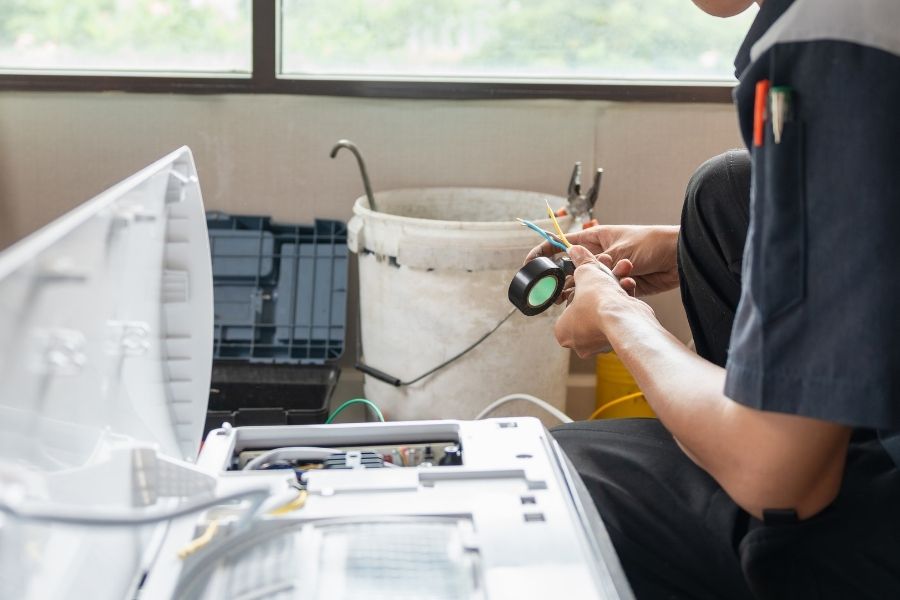
Vertical Riser & Floor-to-Floor Cabling
We install vertical riser cabling that connects floors efficiently and safely using approved pathways and fire-rated materials. This is essential for multi-story office buildings, hotels, and mixed-use properties.
Conduit & Cable Pathway Design
Our team designs and installs structured conduit systems that protect cabling, simplify maintenance, and allow easy future expansion without invasive construction.
Building-Wide Backbone Cabling
We deploy fiber optic and copper backbone cabling to support high-capacity data transmission across large facilities, ensuring stable connectivity across departments and systems.
Equipment Room & Distribution Routing
We create clean, labeled, and organized routing between MDFs, IDFs, server rooms, and network closets to support efficient troubleshooting and scalability.
Code-Compliant Fire-Rated Pathways
All backbone installations follow Denver and NEC code requirements, including fire-stopping, plenum-rated materials, and pathway separation standards.
Fiber vs. Copper Backbone Cabling
Choosing the right backbone medium depends on building size, bandwidth requirements, and future growth plans.
Fiber Optic Backbone
Ideal for high-bandwidth environments
Supports long distances with minimal signal loss
Common in enterprise offices, hospitals, and data-heavy facilities
Copper Backbone
Cost-effective for shorter distances
Suitable for smaller commercial buildings
Often used alongside fiber in hybrid systems
We assess your current and future needs to recommend the most efficient and scalable solution.
Frequently Asked Questions About Infrastructure Wiring & Backbone Routing
Infrastructure wiring refers to the core cabling framework that supports all communication, data, security, and control systems within a building. It includes backbone cabling, pathways, conduits, risers, and distribution routes that connect equipment rooms, network closets, and system endpoints. Proper infrastructure wiring ensures reliability, scalability, and compliance for commercial buildings.
Cabling infrastructure is the organized system of cables, pathways, and hardware used to transmit data, voice, and signals across a building or campus. It includes backbone cabling, horizontal cabling, patch panels, racks, and termination points. A well-designed cabling infrastructure allows for efficient network performance, easier maintenance, and future system expansion.
The six main components of structured cabling are:
Entrance facilities – where external services enter the building
Equipment rooms – central hubs for networking equipment
Backbone cabling – connections between floors and equipment rooms
Telecommunications rooms – intermediate distribution points
Horizontal cabling – wiring from telecom rooms to work areas
Work area components – outlets, patch cords, and end devices
Together, these components create a standardized and scalable cabling system.
Cable laying costs vary based on building size, cable type, pathway complexity, and installation conditions. In commercial environments, pricing is typically influenced by labor, materials, conduit requirements, fire-rating standards, and testing. A professional site assessment is the best way to determine accurate costs for infrastructure wiring and backbone routing.
Backbone cabling in networking is the high-capacity cabling that connects main equipment rooms, distribution frames, and network closets throughout a building. It carries large volumes of data between systems and floors, serving as the central communication pathway that supports all connected networks and technologies.
Backbone networks typically use fiber optic cable due to its high bandwidth capacity, long-distance performance, and low signal loss. In some smaller or legacy systems, high-grade copper cabling may be used for shorter runs. Many commercial buildings use a hybrid fiber-and-copper backbone design.
A backbone router is a high-performance network device that directs and manages data traffic across the main network backbone. It connects multiple distribution networks, ensuring fast, efficient data transfer between systems, floors, or buildings within a network infrastructure.
The four common types of network cables are:
Twisted pair (Cat5e, Cat6, Cat6A)
Coaxial cable
Fiber optic cable
Shielded twisted pair (STP)
Each type serves different performance, distance, and interference requirements in network installations.
Get Professional Infrastructure Wiring in Denver, CO
If your building requires reliable, scalable, and code-compliant backbone wiring, Denver Wiring is ready to help. Our infrastructure wiring and backbone routing services are designed to support today’s technology while preparing your property for tomorrow.