Professional Alarm Wiring Services in Denver for Commercial Properties
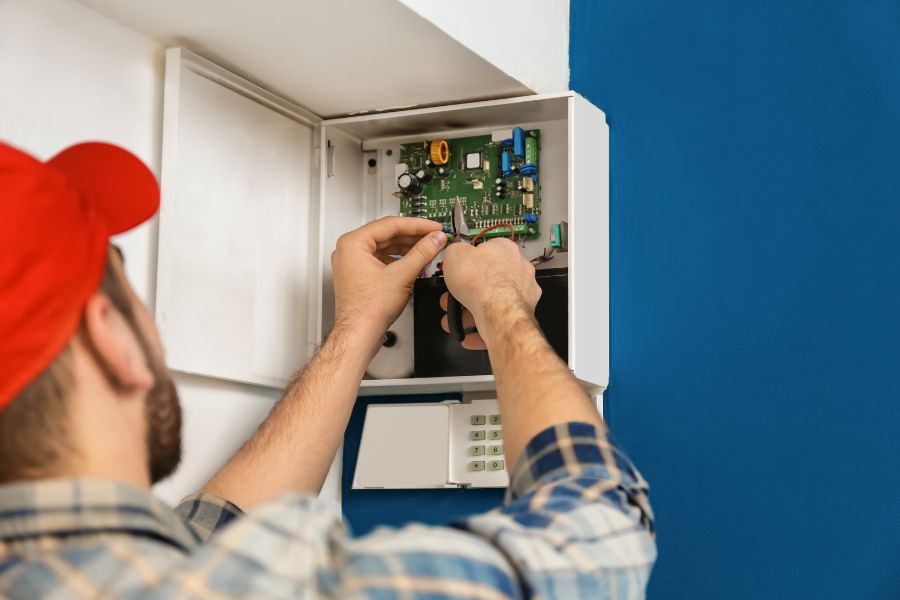
Reliable alarm systems depend on precise, properly installed low-voltage wiring. We provide professional alarm wiring in Denver, supporting fire alarms, smoke detection systems, intrusion alarms, and integrated safety infrastructure for commercial buildings. Our work focuses on clean installation, system reliability, and long-term performance—ensuring alarms activate correctly, communicate efficiently, and meet applicable safety requirements.
What Alarm Wiring Includes in Commercial Low-Voltage Systems
Alarm wiring refers to the low-voltage cabling that connects sensors, detectors, control panels, notification devices, and monitoring equipment. Unlike electrical power wiring, alarm systems rely on signal-based cabling to transmit alerts quickly and accurately.
In commercial environments, alarm wiring supports:
Fire alarm systems
Smoke detection devices
Intrusion and security alarms
Monitoring and notification systems
Integrated safety and access platforms
Proper alarm wiring ensures systems respond instantly and operate reliably during emergencies.
Fire Alarm Wiring & Life Safety Systems
Fire alarm wiring is one of the most critical low-voltage systems in any commercial building. We install and upgrade fire alarm wiring that connects smoke detectors, heat sensors, pull stations, control panels, annunciators, and notification devices.
Correct fire alarm wiring ensures:
Immediate signal transmission during emergencies
Clear communication between system components
Reliable operation during power or system faults
Compliance with applicable building and safety standards
Fire alarm systems are only as dependable as the wiring behind them.
Smoke Alarm Electrical Wiring for Commercial Buildings
Smoke detection systems rely on properly installed low-voltage cabling to function correctly. Our services include smoke alarm electrical wiring for commercial environments, ensuring detectors communicate effectively with control panels and monitoring systems.
We wire and support:
Hardwired smoke detection systems
Building-wide smoke alarm communication
Interconnected smoke alarms
Integrated fire and security alarm systems
Correct wiring improves detection speed and reduces the risk of false alarms or system failure.
Smart & Connected Alarm System Wiring
Modern alarm systems increasingly integrate with smart building platforms. We provide wiring support for connected alarm devices, including systems similar to Nest smoke alarm wiring, where low-voltage cabling supports communication, monitoring, and system integration. While smart alarms use advanced technology, their reliability still depends on stable, properly installed wiring infrastructure.
FAQs — Alarm Wiring in Denver
Alarm systems typically use low-voltage wiring, such as 18/2, 18/4, or 22/4 stranded cable, depending on the device and system design. These wires are used to connect sensors, control panels, notification devices, and monitoring equipment in commercial alarm systems.
An alarm system is wired by running low-voltage cables from a central control panel to devices such as smoke detectors, motion sensors, door contacts, and notification appliances. The wiring allows the system to transmit signals quickly and reliably when an event is detected.
The cost to install a wired alarm system varies based on building size, number of devices, wiring complexity, and system type. Commercial installations typically require an on-site assessment to provide an accurate estimate tailored to the facility’s needs.
L1, L2, and L3 refer to different levels of fire alarm coverage used in some international and commercial standards. L1 provides the highest level of detection coverage throughout a building, L2 covers specific high-risk areas, and L3 focuses on escape routes and key zones. The appropriate level depends on building use and safety requirements.
The Denver fire dispatch system refers to the process by which fire alarm signals are communicated to emergency responders through approved monitoring and dispatch channels. Commercial fire alarm systems are typically connected to monitoring services that notify local fire authorities when alarms are triggered.
Colorado smoke detector requirements are based on state and local building and fire codes, which outline placement, interconnection, and system standards. Requirements can vary by building type, so compliance is typically confirmed during design and installation.
The best security alarm system depends on the building’s layout, risk profile, and operational needs. Commercial systems are often custom-designed to integrate intrusion detection, fire alarms, monitoring services, and access control rather than relying on a one-size-fits-all solution.
Security alarm costs vary depending on system size, device count, wiring requirements, and monitoring options. Commercial alarm systems are usually priced based on system design rather than a flat rate.
A smoke detector is a fire detection device that activates when smoke particles are present. It is commonly used as part of a larger fire alarm system that includes control panels, notification devices, and monitoring connections.
Smoke control devices are components designed to manage smoke movement during a fire. These may include smoke detectors, control panels, ventilation controls, dampers, and system interfaces that help limit smoke spread and improve visibility for evacuation.
The most common smoke detectors are photoelectric and ionization types. Photoelectric detectors are widely used in commercial environments because they respond well to smoldering fires and reduce false alarms.
Schedule Alarm Wiring Services in Denver
Reliable alarm systems start with dependable wiring. Our team delivers professional alarm wiring in Denver, supporting fire safety, smoke detection, and security systems designed for long-term performance.